Automated smart bin

Automated Bin

Scroll down
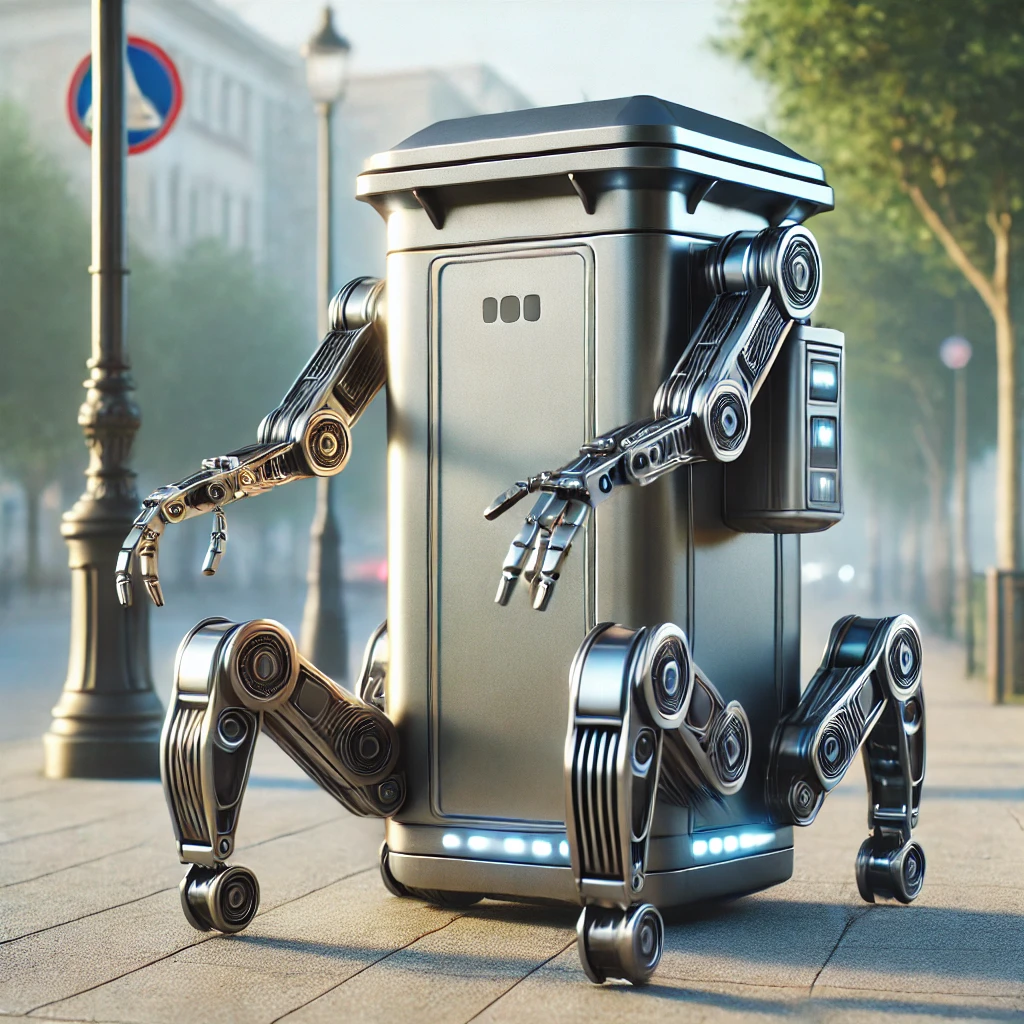
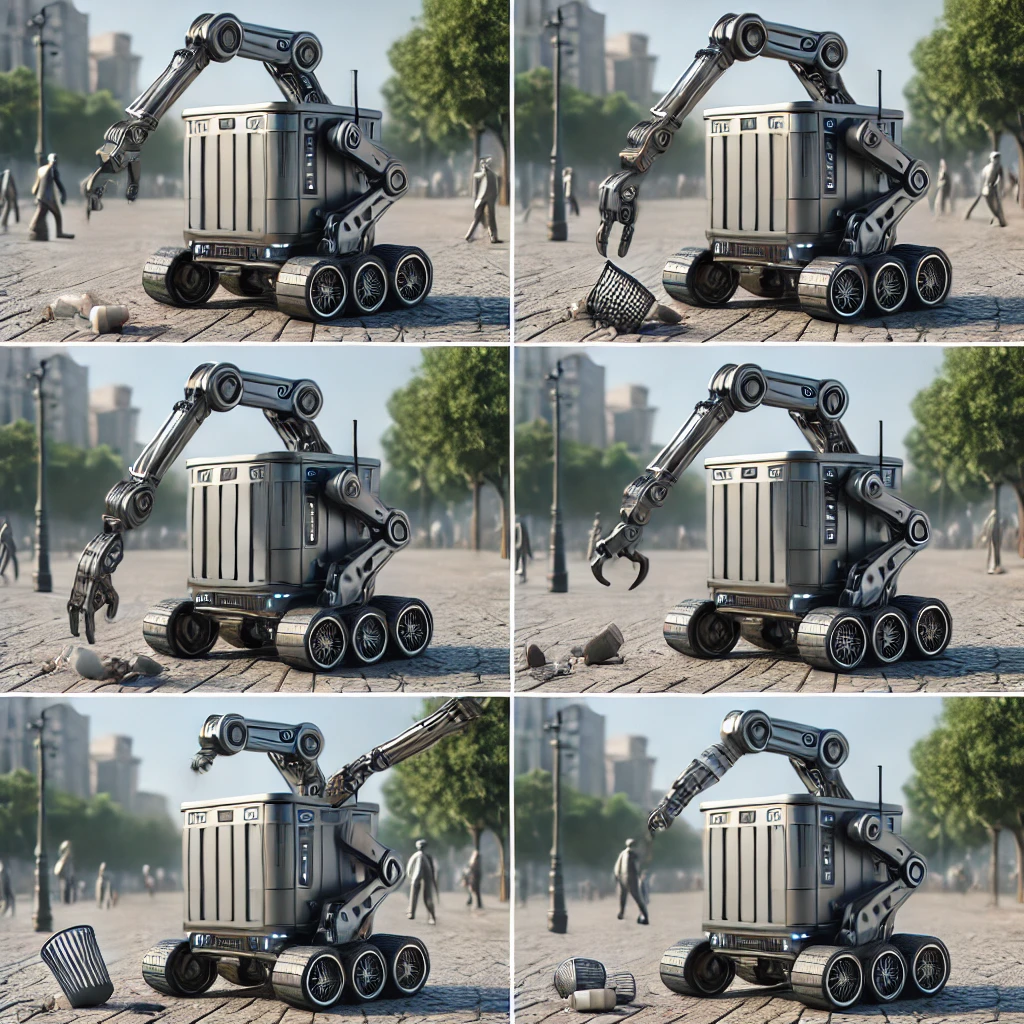
Collage of the automated bin at different stages of use

Introducing the revolutionary AI-powered smart bin—an essential innovation for our modern world! Imagine a bin that not only picks up litter but actively seeks out those in need of disposal. As soon as it detects a person carrying trash, it springs into action, approaching them to effortlessly collect their waste. This futuristic solution not only simplifies trash disposal but also helps keep our environment pristine. Say goodbye to litter and hello to a cleaner, greener planet!

Manufacturing

1
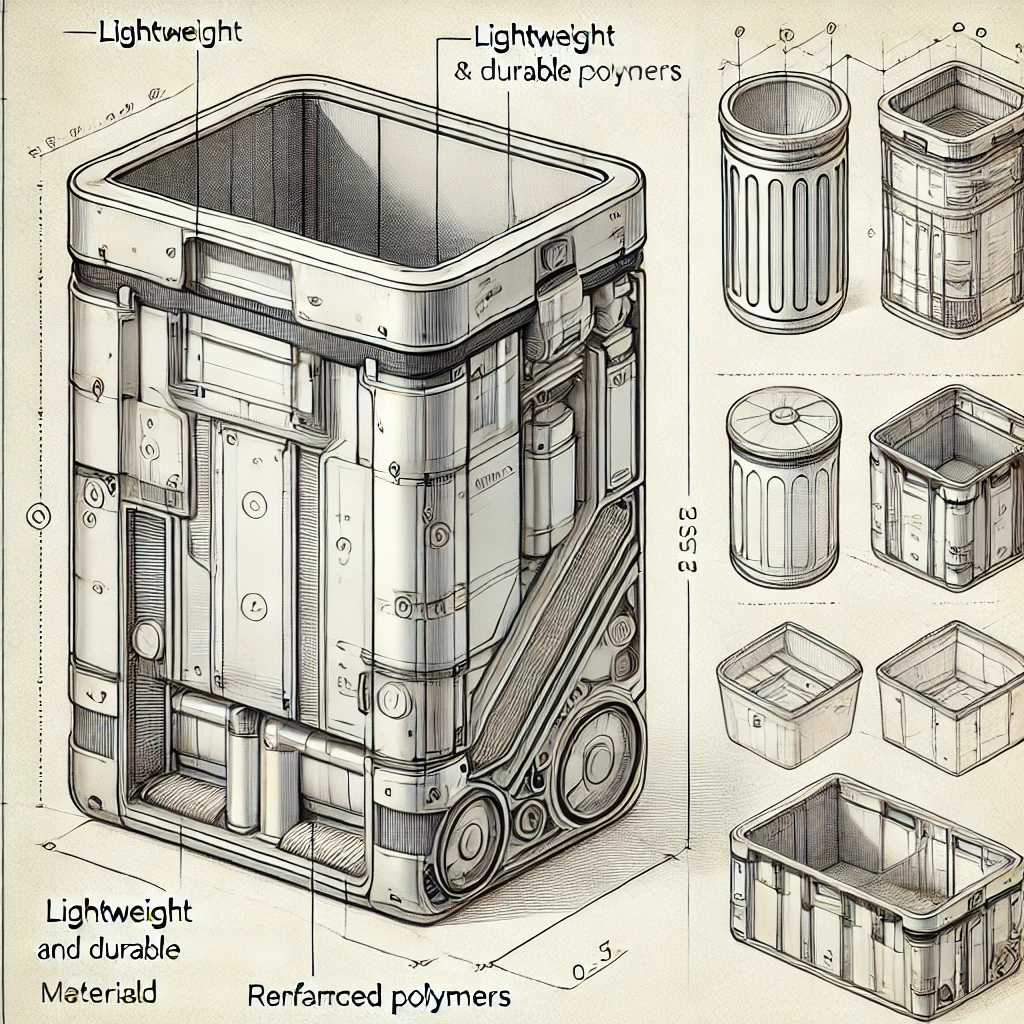
Design and structure illustration

Design and Structure

Material: Use lightweight but durable materials such as aluminum alloys or reinforced polymers for the main structure. This ensures both mobility and resilience to outdoor conditions.
Shape and Compartments: The dustbin would have a main compartment for waste storage, and smaller sections or mechanisms for sorting recyclable materials, if desired.
2
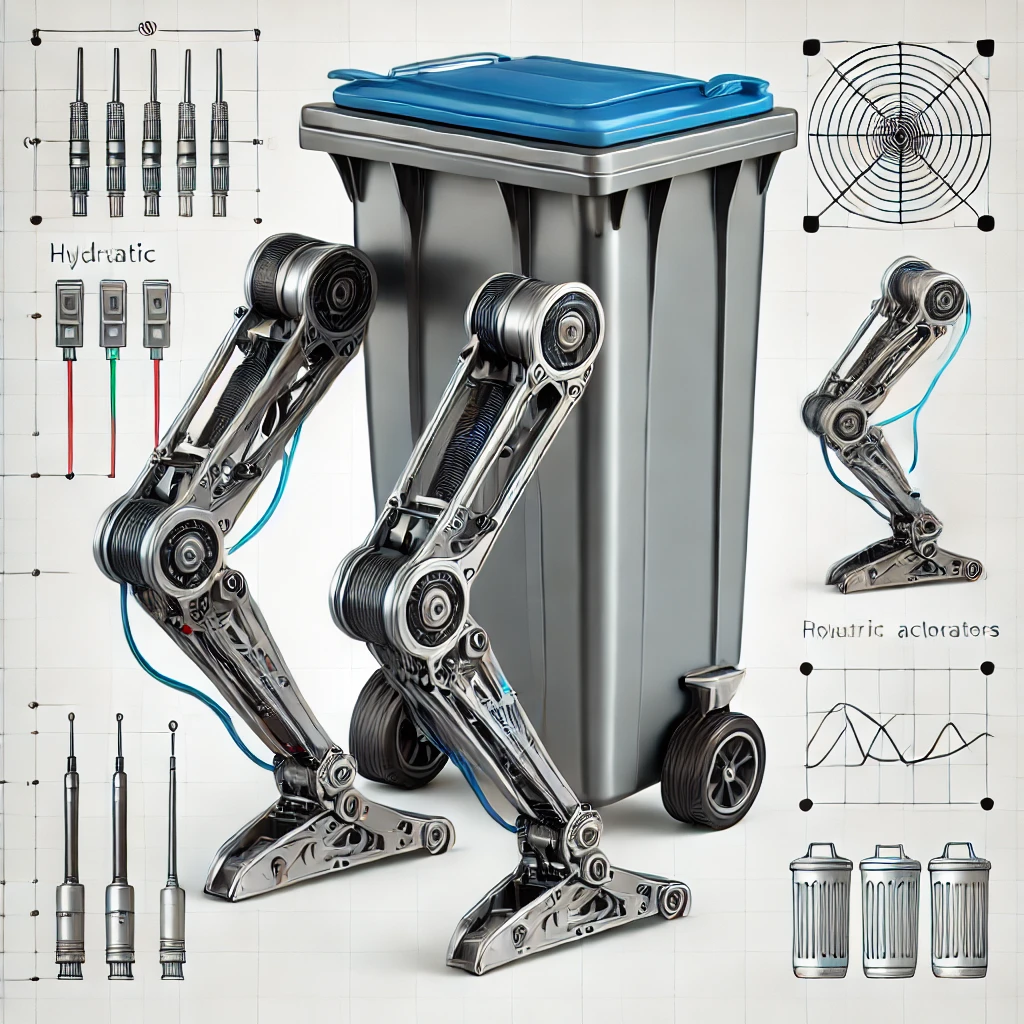
Mobility system illustration

Mobility System

Legs: Implement robotic legs using hydraulic or electric actuators to enable walking or stepping motion. The legs would be modeled similar to robotic systems seen in advanced robotics projects, like Boston Dynamics' robots.
Wheels: If walking mechanisms prove complex, wheels or tracks could be used instead, making navigation easier and more stable.
Sensors for Balance: Incorporate gyroscopic sensors and accelerometers to help the bin maintain balance and adapt to different terrains.

3
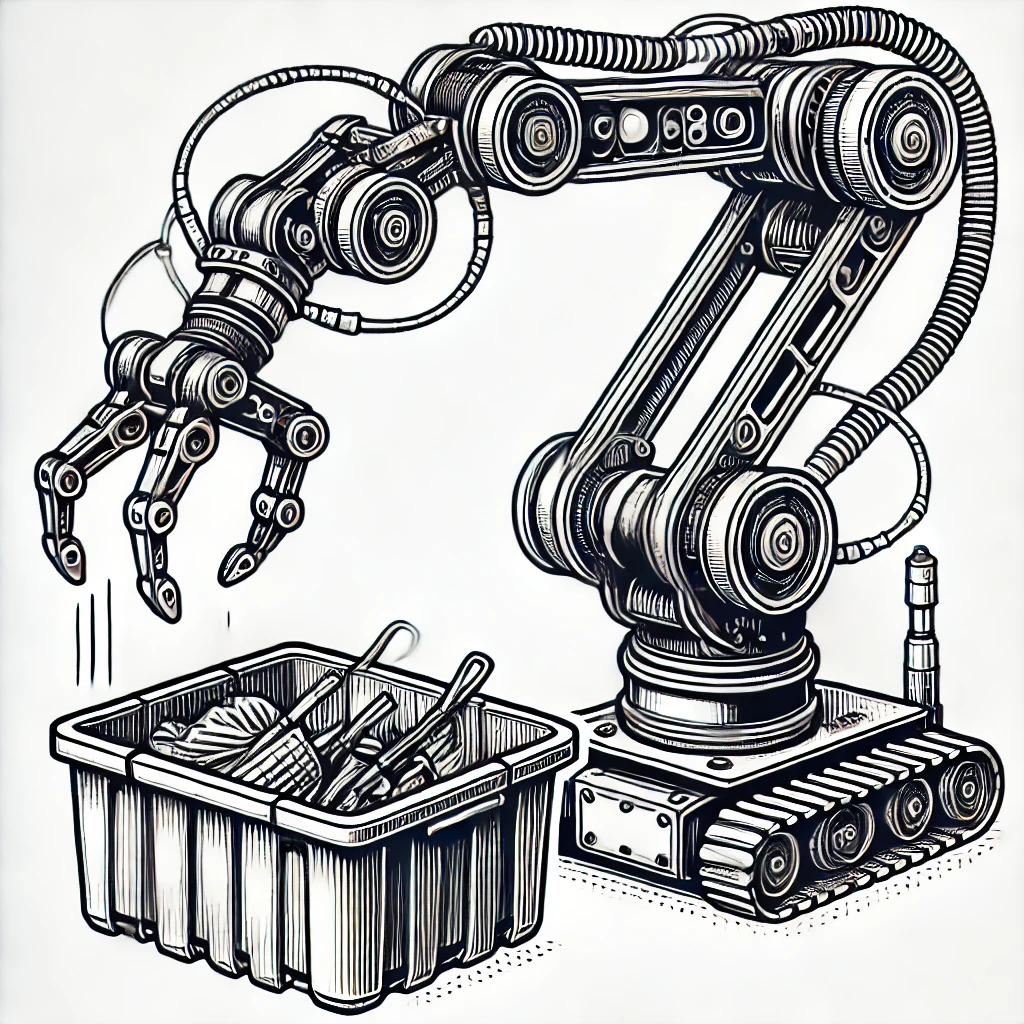
Robotic arms illustration

Robotic Arms

Actuators: The hands would use servo motors or pneumatic actuators for smooth and precise motion. The fingers could be designed with flexible materials to safely grab and lift different types of trash.
Gripping Mechanism: Develop grippers that can adjust their grip strength based on the trash's size and fragility. Soft robotics principles could be employed to avoid crushing lightweight objects.

4
Sensors and perception illustration

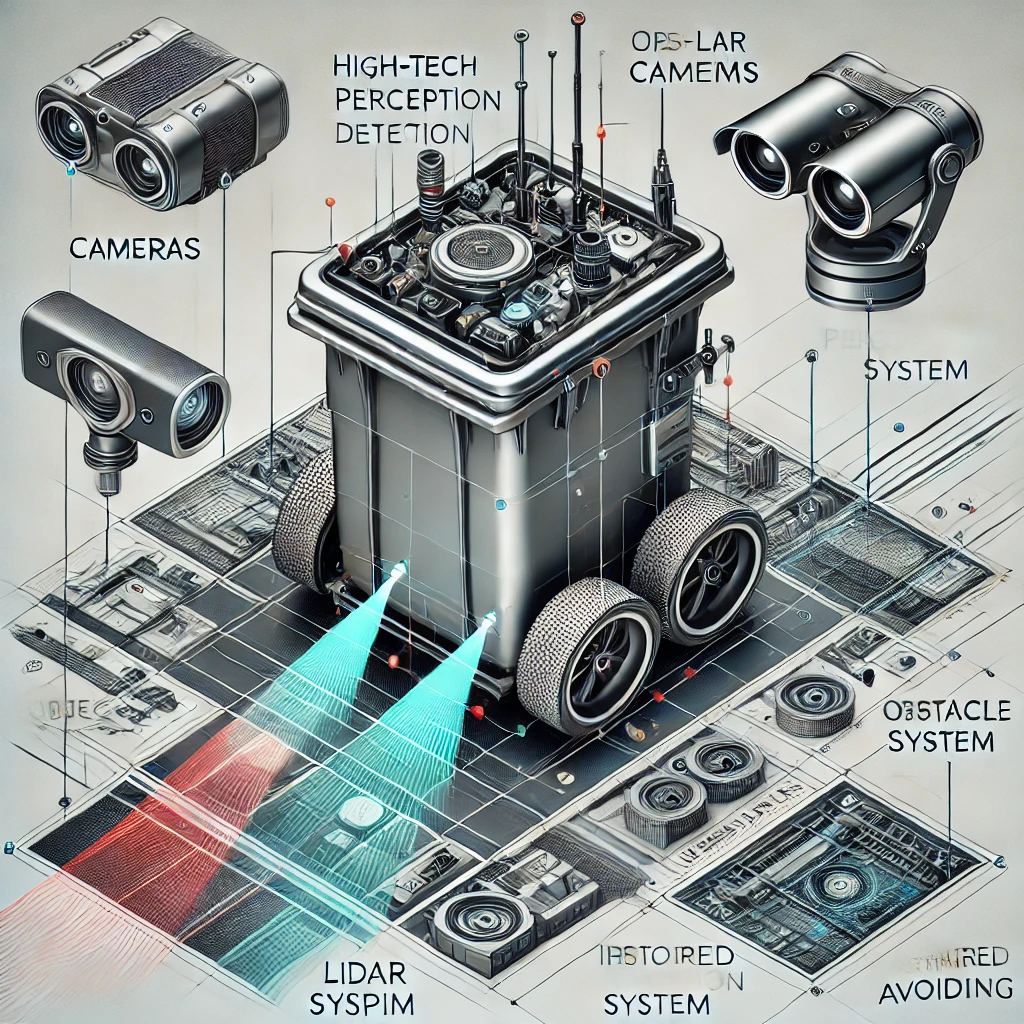
Sensors and Perception

Cameras: Install cameras with object detection and classification algorithms to identify trash and differentiate between recyclable and non-recyclable items.
Proximity Sensors: Use infrared or ultrasonic sensors to detect obstacles and people, ensuring safe and efficient navigation in public spaces.
LIDAR: Integrate LIDAR technology for mapping and autonomous navigation in busy or complex environments.

5
Automation and intelligence illustration

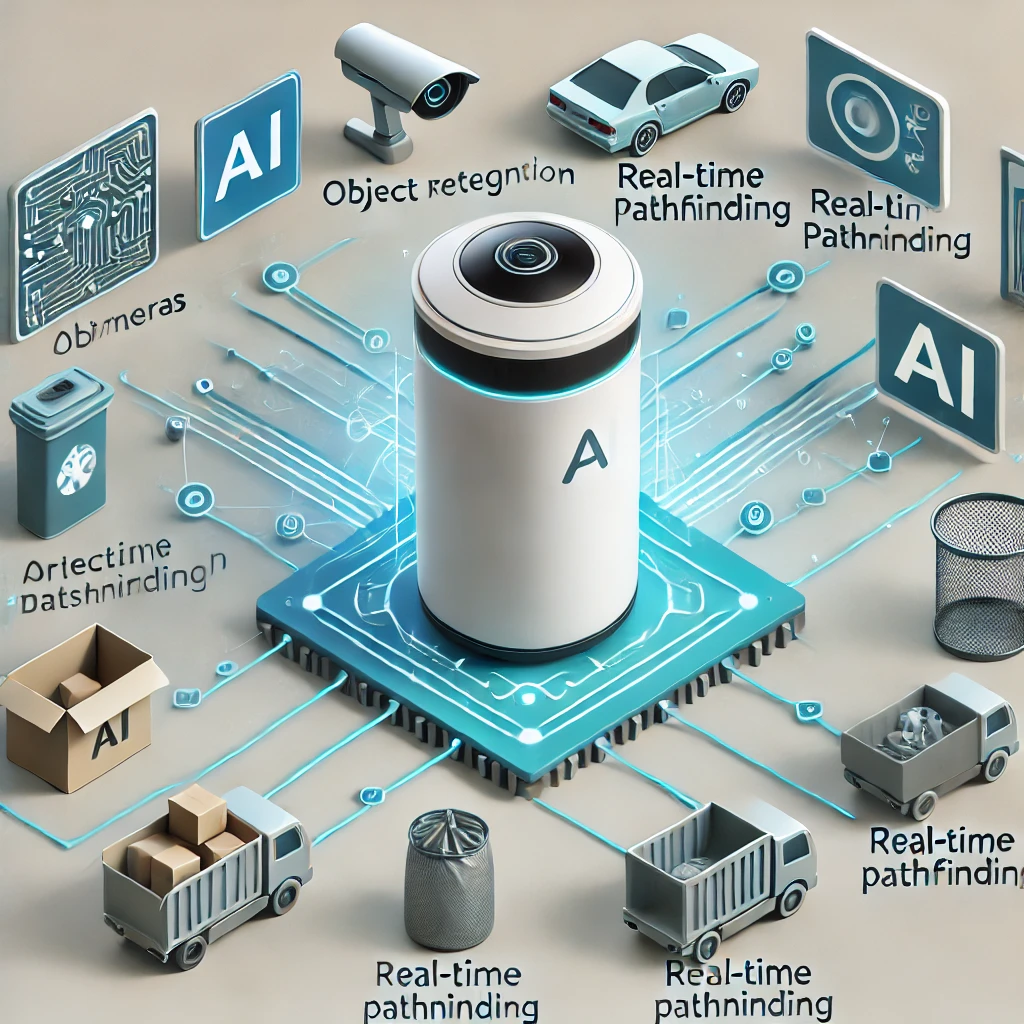
Automation and Intelligence

Artificial Intelligence: Develop AI algorithms for object recognition, pathfinding, and decision-making. Machine learning models would be trained to detect various trash types and determine the best way to pick them up.
Autonomous Navigation: Implement algorithms for real-time mapping and route optimization to avoid obstacles and find efficient paths around the city.
Machine Vision: Use deep learning models for recognizing trash on roads and analyzing human gestures when handing over trash.

6
Power system illustration

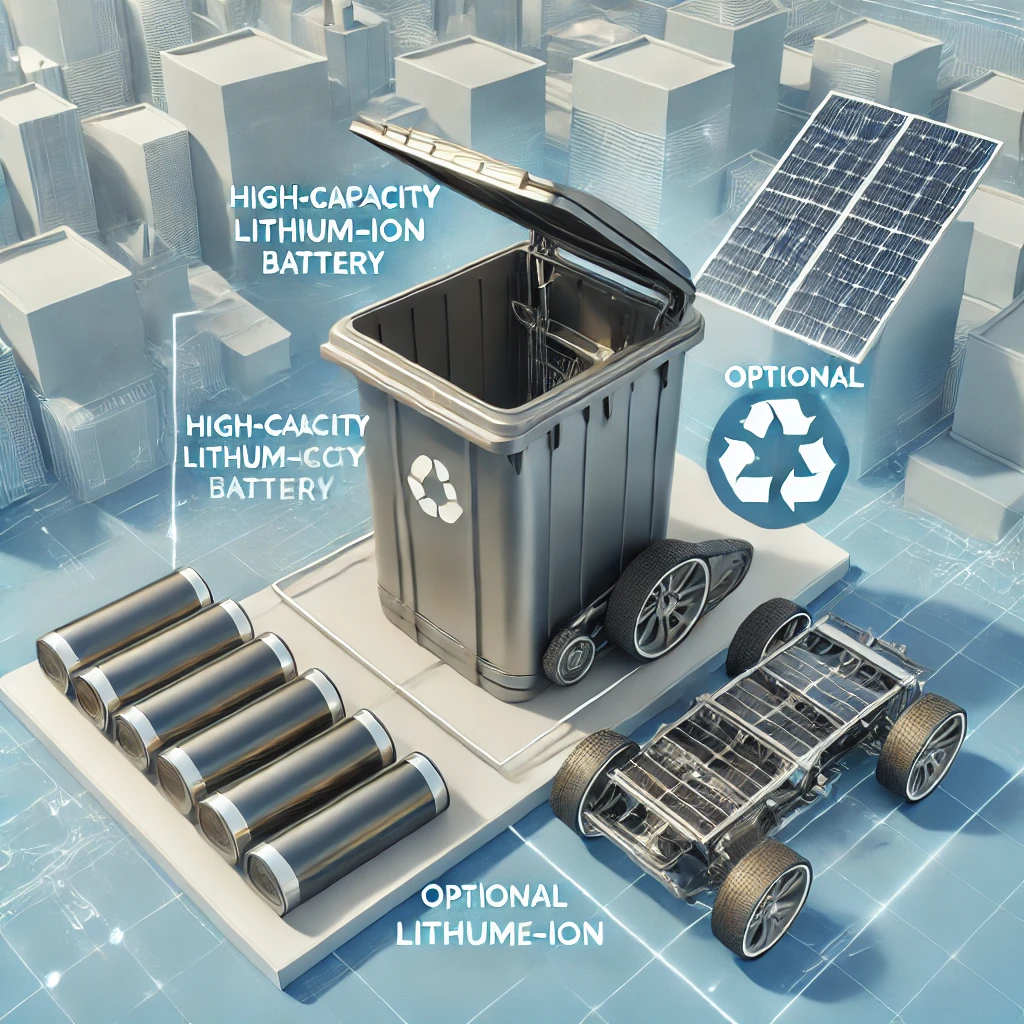
Power System

Battery: Use high-capacity lithium-ion batteries to provide energy for movement, sensors, and processing units. Solar panels could be added for supplementary power.
Energy Management: Implement efficient power management software to optimize battery life, especially during heavy usage.

7
Communication and data management illustration

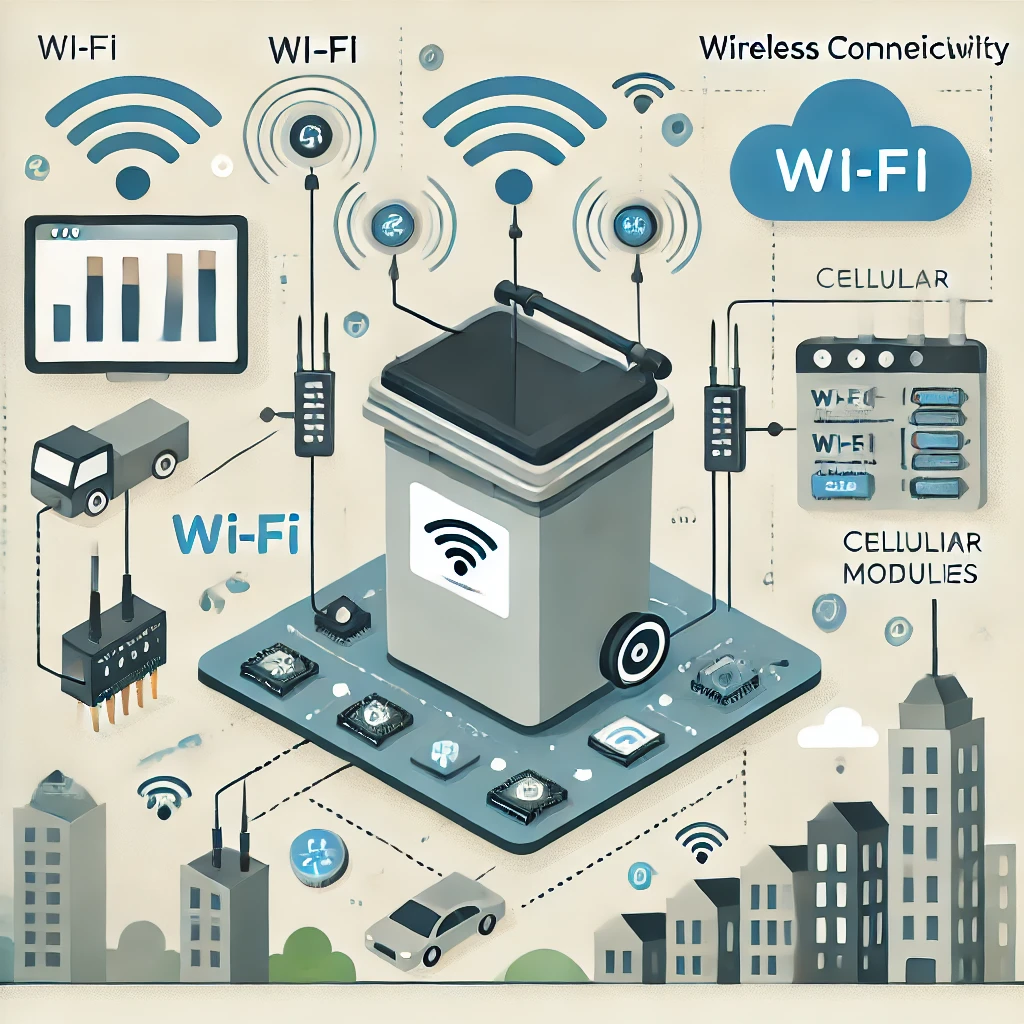
Communication and Data Management

Wireless Connectivity: Equip the bin with Wi-Fi or cellular modules to send status updates and receive commands. This would enable remote monitoring and route updates from a control center.
Cloud Integration: Store data on cloud platforms for analysis and optimization. Data on trash collection patterns could help city planners improve waste management.

8
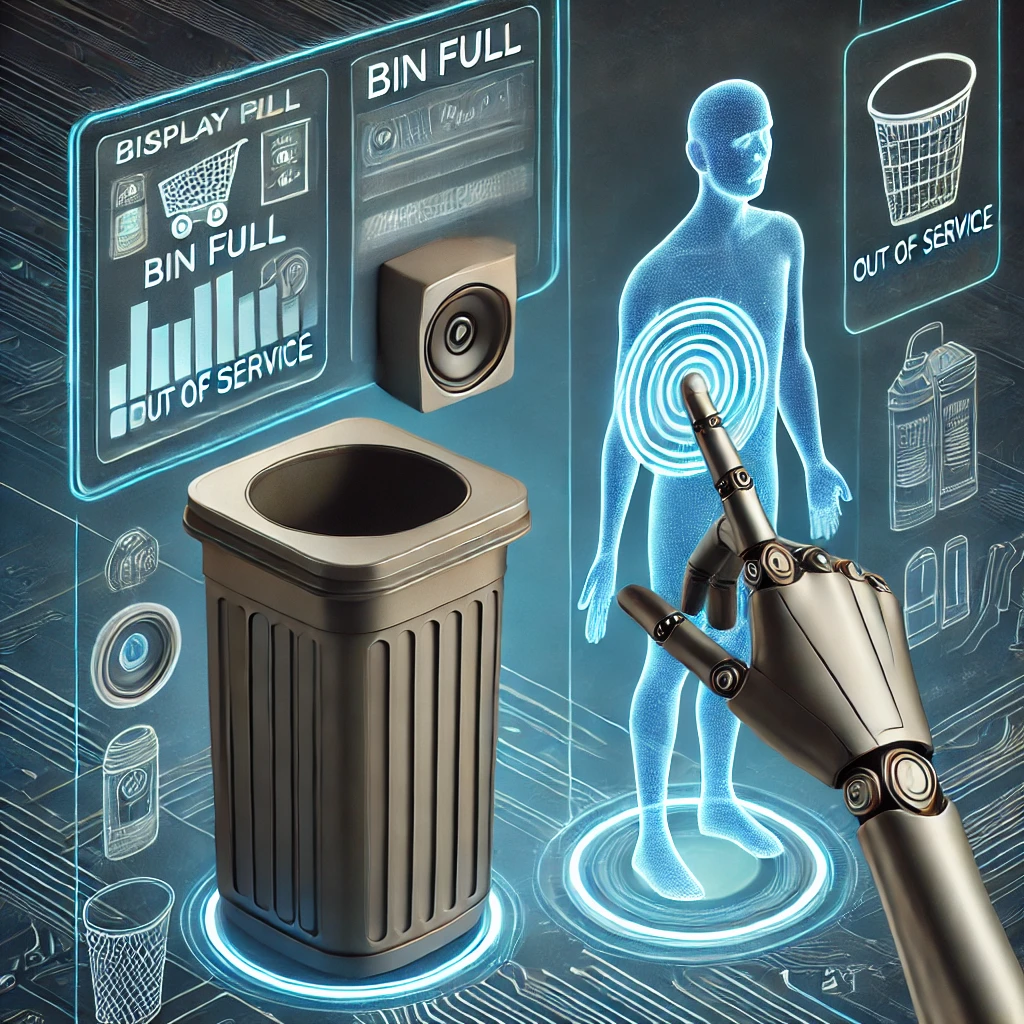
Interaction and user interface illustration

Interaction and User Interface

Display Panel: A small screen could provide information, like when the bin is full or out of service.
Audio Interaction: Use speakers for simple voice interactions, providing feedback or instructions to people nearby.

9
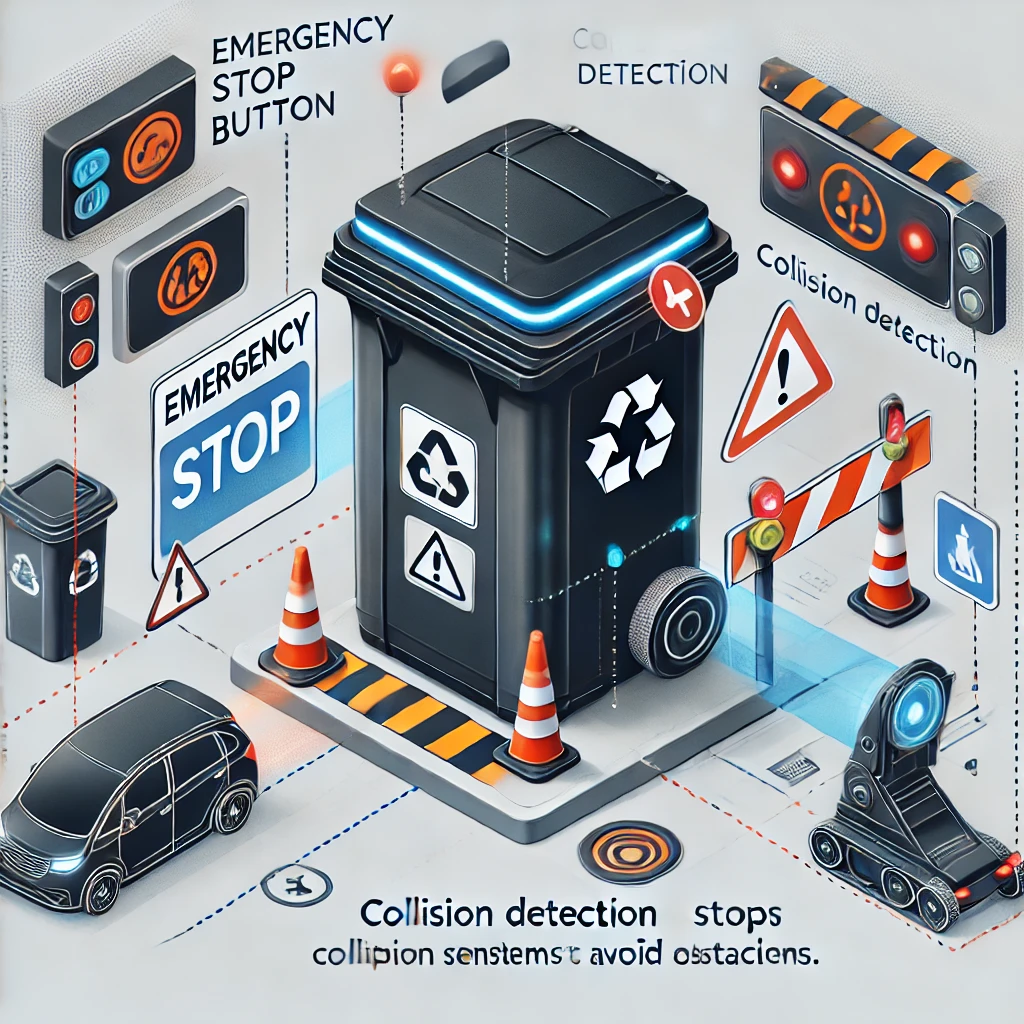
Safety measures illustration

Safety Measures

Emergency Stop: Install a manual override or emergency stop button.
Collision Avoidance: Ensure the dustbin can detect and stop for obstacles, including animals or people, using AI-powered safety features.

10
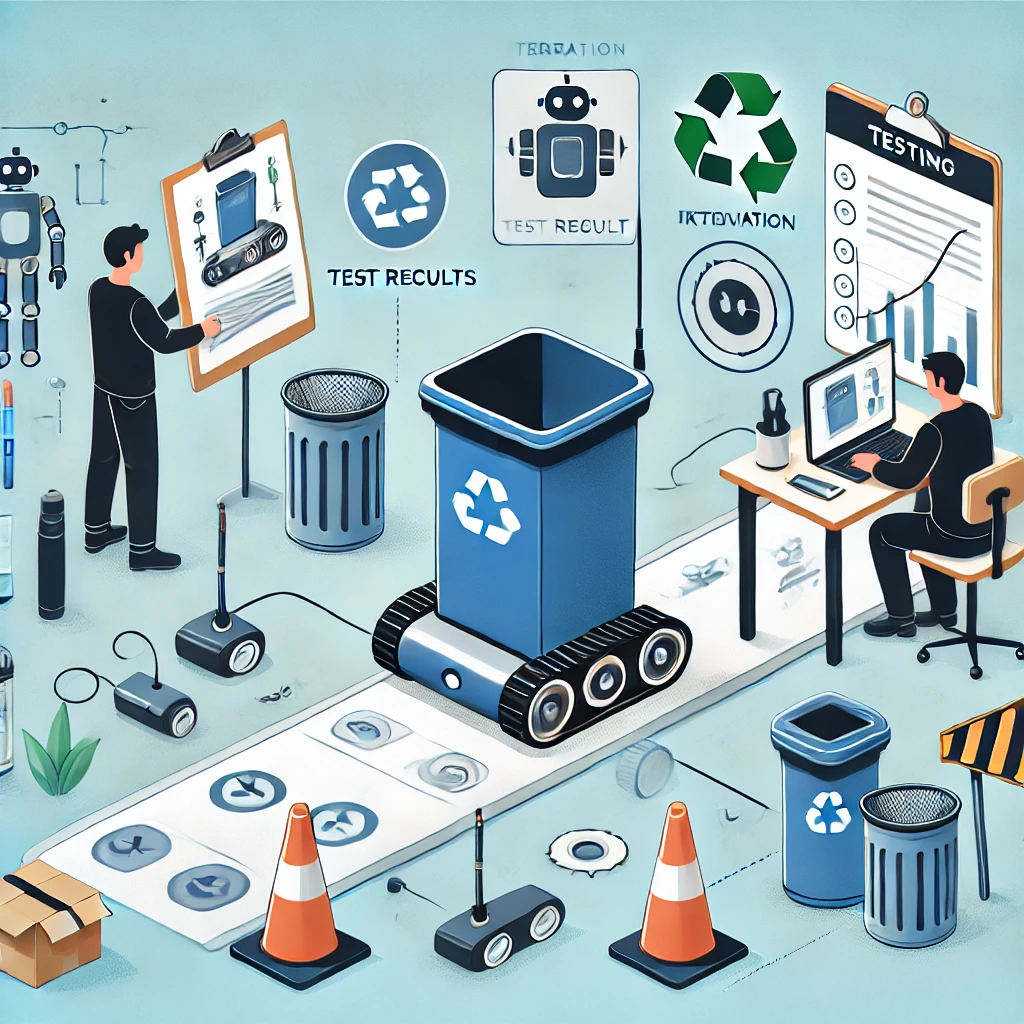
Testing and iteration illustration

Testing and Iteration

Prototyping: Build initial prototypes and conduct tests in controlled environments.
Public Trials: Gradually roll out trials in real urban settings, collecting feedback and refining the design based on user and environmental interactions.

This innovative automated bin marks the beginning of a smarter world, showcasing how technology can be utilized effectively. Embrace this leap forward into a more sustainable future!